


Danielle Walker Palmour. Director, Friends Provident Foundation
For any charity or organisation that holds private resources in service of a public mission, one question sits at the heart of its legitimacy: what does it mean to pursue social change when you are also part of the very systems you seek to transform? The more resources an organisation holds – financial, human, reputational – the more deeply it becomes woven into existing power structures. And with that embeddedness comes both responsibility and discomfort.
Friends Provident Foundation (FPF) has lived this tension from the moment of its creation. Established in 2004 following the demutualisation of Friends Provident Life Office, the Foundation was born from one system of power – the financial and investment world – and tasked with serving another: the social legitimacy and public purpose of charitable work. That dual heritage shapes how we understand our role, our tools, and our responsibilities.
Over the past two decades, we have learned that meaningful social change requires the ability to see, hear, and feel the system – its incentives, its blind spots, its resistance, and its possibilities. This blog post reflects on what that has meant for us in practice.
Seeing the system
The first step in any systemic change effort is to locate yourself honestly within the system. Too often, organisations imagine themselves as either powerless – buffeted by forces beyond their control – or as righteous outsiders, standing apart from dysfunctional structures and calling for reform. The reality is usually more complicated.
At Friends Provident Foundation, we are acutely aware that we are both an economic actor and a social change organisation.
As an investor, we are deeply rooted in the financial system. As a charity, we work to reshape that system, so it better serves people and planet. Our programmes – whether grants, operations, direct investments in social enterprises, or stewardship of our mainstream investment portfolio – draw on power from all these spaces.
Seeing the system clearly means recognising where our leverage lies and using it deliberately. For example, as an investor with social goals, we:
- engage actively with our investment managers, advisors and peer foundations to ensure our portfolio aligns with our mission.
- hold companies to account on issues such as paying the real Living Wage, tax transparency, and responsible governance.
- work collectively with investor networks to attend AGMs, file or support shareholder resolutions, and push for greater corporate accountability.
Our grants programme mirrors this systemic lens. One of our strands focuses on changing the financial system itself: supporting research, advocacy and practical projects that target the structures, rules and narratives that keep the current system locked in place. We fund organisations working to shift power, redesign financial infrastructure, and strengthen the ecosystem of actors capable of driving reform.
Seeing the system, in other words, is not an abstract exercise. It is a discipline: understanding where you sit, how you connect to others, and where your actions can create meaningful pressure for change.
Hearing the system
Seeing is not enough. To act effectively, organisations must also develop ways to hear from those inside and outside the system – especially from people whose experiences, expertise or perspectives are often marginalised.
For us, this has meant building organisational “muscles” across a spectrum of engagement:
- Collaboration — Participation — Co‑production — Consultation — Feedback
Each requires different structures, skills and mindsets. Each challenges traditional power dynamics. And each has reshaped how we work.
A few examples:
- Co‑producing grant applications: We have developed processes that allow applicants to work directly with grant staff to shape their proposals. This helps ensure that good ideas are not dismissed simply because they use non‑traditional language or come from outside mainstream economic discourse.
- Listening during strategy development: In a recent strategic review, we held online workshops with grant partners, donors and fellow funders to gather their views on our role, longevity and contribution to the wider ecosystem.
- The Endowments Investing Challenge: In a £50m collaboration with other mission‑led investors, we invited investment managers to design a portfolio that could meet the needs of future generations. Crucially, we also recruited a Future Generations Panel of young adults to co‑design the assessment framework, participate in shortlisting, and recommend a winning proposal to final decision-makers. Their moral clarity and challenge reshaped our understanding of what it means to bring people, especially those rarely included in investment decisions, into the room.
Hearing the system is hard work. It requires humility, patience, and a willingness to be changed by what you learn. But without it, organisations risk reinforcing the very power imbalances they aim to dismantle
Feeling the system
The final dimension is perhaps the most uncomfortable: recognising that many people within systems of power and privilege are not malicious or indifferent. Often, change is simply difficult. Systems are sticky. Habits are entrenched. Incentives are misaligned. And even when we intellectually support change, we may resist it emotionally.
Feeling the system means acknowledging that we, too, are caught in these webs. And sometimes, the discomfort we experience becomes a source of insight.
One example stands out. In 2012, we funded the High Pay Centre to explore company pay gap disclosures and recommend processes to make them a reality – years before such disclosures became mandatory for large organisations.
Inspired by this work, we decided to apply the recommendations to ourselves.
As a small organisation, calculating and publishing our pay gaps was deeply uncomfortable. It raised questions about privacy, fairness and interpretation. But it also taught us valuable lessons about the lower limits of disclosure, the emotional labour involved, and the human side of organisational change. These insights later informed our work on ethnicity and gender pay gaps, helping us support boards and senior teams to navigate similar challenges.
Feeling the system, then, is not a weakness. It is a source of empathy, realism and practical wisdom.
Conclusion: Power as a tool for change
Being part of systems of power can be a constraint – but it can also be a resource. Our ability to see, hear and feel the system has given us tools, skills and ways of working that make us more effective agents of change. It has helped us understand where resistance lies, where opportunities emerge, and how to act with integrity in complex environments.
Social change is rarely straightforward. But by embracing our position within the system – and by listening, learning and acting with intention – we can help shape a fairer, more sustainable economy for the future.
For more information:
- Friends Provident Foundation works towards a fair and sustainable economy. We use our endowment, grants, partnerships and convening power to support new thinking, challenge harmful practices, and strengthen organisations working for long‑term systemic change.
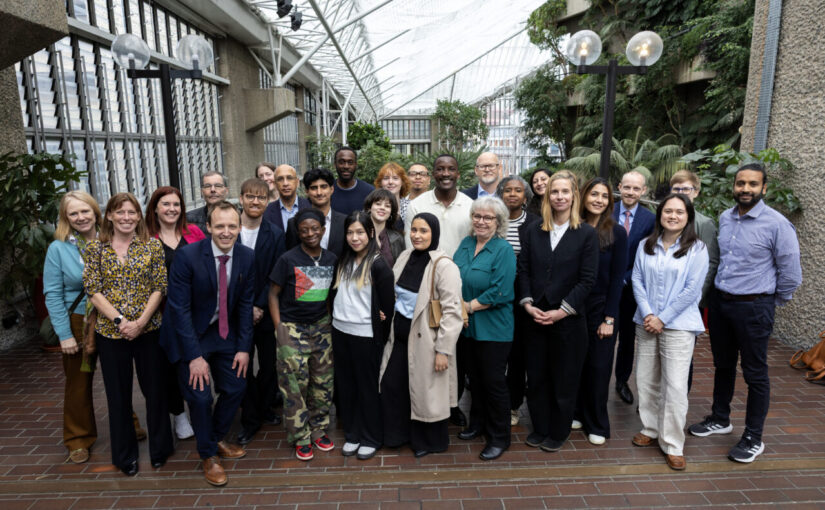
Feature photo credit: Steve Bainbridge
The views, thoughts, and opinions expressed in this blog are solely those of the author and do not necessarily reflect the policies or views of the University of York