
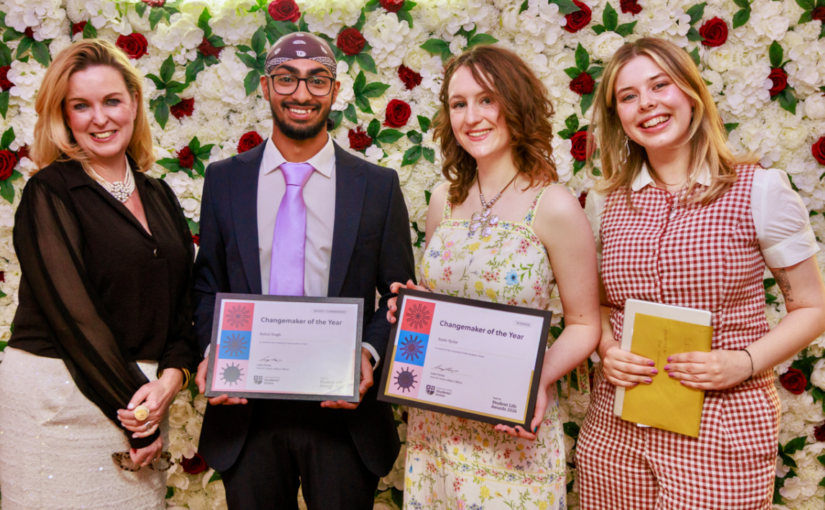


Susie Syme, Environmental Science graduate, University of York and winner of the 2026 Changemaker of the Year at York SU’s Student Life Awards
When you hear the word CHANGEMAKER, I think it’s easy to instantly think of the David Attenboroughs, Malalas, and Obamas of the world – those big figures, or those associated with international summits, high-level legislation, and huge, important manifestos.
But what if we challenged that narrative?
Standing on the stage in Central Hall as Student Orator only last month, addressing an audience of 1,100+ people celebrating Summer Graduation, gave me a platform to challenge that idea and say that real changemaking begins in the everyday actions of people.
But let’s take a step back.
Taking a year out of university for an industrial placement made me appreciate my final year as an undergraduate even more. Whilst driven with a healthy dose of FOMO and a desperate attempt to maximise my last moments at York, I spent my final year working across environmental science, student politics, and community organising.
These experiences marked a transition for me from the hard-core facts of my academic work (learning the science of the climate emergency) to the need for action and social change for the public good – something our University prides itself on championing.
For me, this so-called “action” began in the small moments. It meant clothes-sorting sessions with Swap Don’t Shop so our committee knew what fun (and not-so-fun) items had been donated. It meant facilitating Climate Fresk workshops with Environmental Sustainability At York (ESAY) to map the story of the climate emergency and tap into our emotions around it. It meant simply saying yes to opportunities such as joining York Student Union’s SUmmit or the Environment and Social Responsibility (ESR) Forum (a quarterly gathering of Sustainability Champions from across the Union that feeds directly into SUmmit and helps embed sustainability into student committees’ everyday decisions).
You could call me crazy for doing all this in my final year while trying to write a dissertation and actually get my degree, but I just wanted to dive in.
It just so happened that this behind-the-scenes work got recognised.
Being awarded Changemaker of the Year at York SU’s Student Life Awards was an incredible honour.
I am still somewhat in disbelief all this time later, and beyond the award itself, it’s given me a moment to reflect:
How do we actually create social change? What drives it, who decides how it happens, and how does it deliver genuine public good?
And I’ve got a few thoughts.
1. Change Must Be Tangible, Accessible, and Inclusive
At the end of my first year at York, I came across a volunteering project called Swap Don’t Shop (SDS), which hosts clothing swaps so students can easily adopt sustainable habits without leaving campus. This student-led initiative addresses fast fashion and consumption ethics, while also supporting students through the cost-of-living crisis.
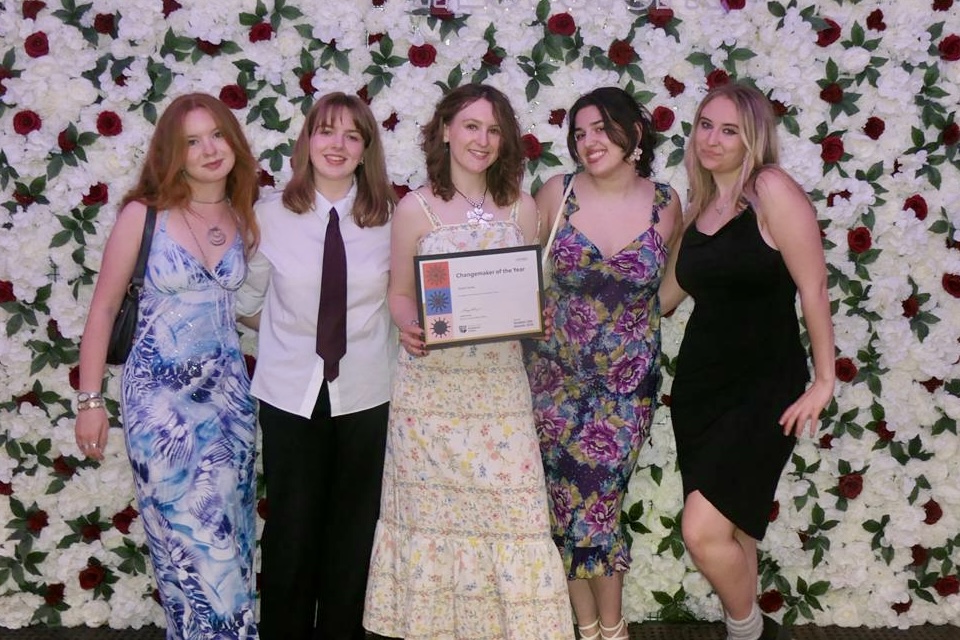
Susie picture with her Swap Don’t Shop colleagues (L to R): Dora Phillips, Emily Clarke, Susie, Eleni Alagkiozidou (the new President for SDS for 2026/27) and Izzy Kingsmead.
This group would go on to shape my university experience and became an opportunity to see visible change when someone found the perfect item for a night out, or to support someone on a journey of identity. That, and of course, the sustainability angle, was an absolute must for me to be able to witness that difference and positive change. I stayed on the committee for three consecutive years, including remotely while on placement, and took on the role of Project Coordinator (President) for 2025/26. So surely something went right!
I still think that getting involved with this volunteering project is one of the best ways for students/staff/associate members at UoY to take small, positive actions that benefit the planet. Fast fashion is a complex global problem rooted in environmental degradation and labour exploitation. But the committee and team behind SDS, and the message I always wanted to send, is that we aren’t there to lecture people or make them feel guilty for buying a top from Primark, H&M, Shein, Zara etc. Instead, we help individuals “do better” by becoming conscious consumers, encouraging the use of tools like Good On You (which rates brands’ impact) and providing accessible second-hand alternatives (i.e. sewing and looking after clothes) that foster lasting habits.
Since 2020, this project has supported the idea of positive impact for the public good by lowering barriers to participation – plus the membership is free (and please check out volunteering projects and get their membership; they don’t cost anything to join, as classic societies do, and higher member counts mean greater collective impact). We’ve hosted regular swaps, collaborated with other societies, and organised fun social events such as citywide charity shop crawls. We turned sustainable fashion from a moral obligation into a joyous, community-centred, judgment-free space. We created a space where:
Purpose + Joy = Longevity
In a time dominated by climate anxiety, environmental action cannot be sustained through guilt or from someone giving a lecture. By embedding joy, a sense of belonging, and accessibility, we built a project that people actively wanted to return to.
In 2025/26 alone, we engaged roughly 900 participants and rehomed over 650 items across 25+ events.
Social change for the public good occurs when we make global challenges into tangible, positive, everyday community infrastructure that people actually want to engage with.
(And if you ever attend a swap, please don’t donate stained clothes or underwear! We’re students running this, and you’d be surprised by what people donate…)
2. Bridging Grassroots Passion and Institutional Power
Grassroots initiatives are fantastic for identifying what needs improving in a community. Still, local action can hit a wall when it remains disconnected from people in positions of structural power who can put an idea on the map.
Throughout my final year, I made a point of saying yes (not to the point of burnout), but to ensure student voices were heard in decision-making spaces. Serving as the Social Sustainability Representative on the ESR Forum and representing student interests on SUmmit, I quickly learned that effective changemakers must balance grassroots activism with institutional strategy.
From brainstorming a Circular Economy Coffee Reuse Scheme linking campus venues to local allotments, to speaking to BBC Look North about the student housing crisis, I got to see how real progress happens when we call it out without fear: not when students are treated as passive recipients of policy, but as active “co-designers” of it.
Higher education empowers its future changemakers best when it opens its doors to active listening and true co-production.
3. Empowering the Voice of Change
So here comes the big question: Who gets to decide what constitutes the “public good”?
Typically, this has been a top-down idea driven by policy figures or academic researchers. Yet, whether facilitating Climate Fresk sessions with ESAY on campus or engaging with organisations outside university life, such as My Life My Say, I’ve seen that the most impactful solutions emerge when we broaden who gets a seat at the table.
A select few cannot dictate the public good; you need to constantly negotiate with the core communities involved. For me, this translates as bringing underrepresented youth perspectives directly into leadership teams, media discussions, or policy forums, which is the difference between a policy that looks right on paper and one that actually works for the people it’s meant to serve.
4. Creating the Future
As I transition from university into the world of work, I keep on returning to the idea that I want to maintain in life: no individual or institution creates social change in isolation.
While my “Changemaker of the Year” award carries my name, the work behind it belonged to hundreds of students who brought clothes to a swap, SU staff who helped navigate institutional hurdles, and even locals who built connections with me to support a vision.
If anyone is seeking to drive change, especially higher education institutions, do look to your students and youth communities as co-creators. Give us the platform to have institutional backing, integrate our insights into governance, and trust us to help shape a fairer, more sustainable future.
If you fear low engagement, don’t be discouraged. I think there is a huge, untapped appetite among students stepping into adulthood who want to move beyond passive habits and actually get involved. For me, taking a year in industry broke the traditional dynamic ingrained in us since primary school; it helped me stop seeing staff as distant authority figures and start viewing researchers as peers. Gen Z is a generation that has grown up witnessing major shifts across mental health, climate, politics, culture, and social media without really having the platform or means to shape them. We are ready to move past passive compliance (even if some of us need a gentle nudge), and the students who step forward will share your values, mindset, and drive to create real change.
This isn’t to say older generations should back off, I encourage you to please bring your passion too! Driving change isn’t solely a young person’s responsibility, and we need everyone to be in this together.
If you’d like to see what happens when young people are given the platform to speak to an audience of 1,100 – a recent highlight and defining opportunity for me, you can watch my Student Orator Graduation Speech on YouTube
Thank you for reading! Feel free to connect with me on LinkedIn and let me know you came from this article! – https://www.linkedin.com/in/susannahsyme/
Susannah “Susie” Syme is a 2026 Environmental Science graduate from the University of York. From winning Changemaker of the Year at York SU’s Student Life Awards for recognition of her leadership in the circular economy and student policy to addressing her graduating cohort as Student Orator, Susie would certainly say her final year was defined by getting hands-on, striving for tangible change, and leaving a lasting legacy. Since her time at university, she has specialised in environmental communication, digital innovation, and community engagement, having served as Project Coordinator for Swap Don’t Shop, as the SUmmit Volunteering Representative, and having completed an industrial placement with the Environment Agency.
The views, thoughts, and opinions expressed in this blog are solely those of the author and do not necessarily reflect the policies or views of the University of York