
We have another guest blog – Niamh Malone and Isabella Brinton, two of the wonderful interns from the Disability Inclusion Toolkit project, reflect on the process of creating the toolkit and their experiences creating it, introduced by Dr Alexander Reid, project lead:
The ‘Including Disabled People in Research’ Toolkit is a resource to support and equip researchers, across all disciplines, with guidance to make their research practices more inclusive and accessible to disabled people. It was created by a team of staff and students who had lived experience of disability and a genuine passion for enhancing accessibility with the aim of offering useful, practical and evidence-based guidance rooted in both lived experience and academic research. This blog post, written by one of the postgraduate student interns, Niamh, with comments from one of the undergraduates, Isabella, will be a reflection on the experience of creating the toolkit and will hopefully encourage you to go and take a peek at our work.

The toolkit project was borne out of the recognition that many people involved in research are well intentioned, and want to improve their practices regarding inclusion, but may not necessarily know where or how to start. Matched funding to develop such a resource was generously provided by the Equality, Diversity, and Inclusion (EDI) Research Center and the Valuing Voices for Equitable and Responsible Research team, both initiatives with a heavy focus on inclusivity that have been developed at the University of York.
From this, an inclusive recruitment process took place, which focused on the desires and passions of applicants as opposed to just their pre-existing qualifications. From the intern perspective, this focus was made clear through the recruitment experience as Isabella recalled during her reflections on her initial interaction with the project. “I first heard about the Toolkit project and the internship through my Department newsletter. The description of the project highlighted the ambition to improve disability accessibility within research, and this quickly resonated with me. Both due to personal experience, as well as previously working as a Special Educational Needs and Disabilities (SEND) Teaching Assistant, this was an area that I knew I was both passionate about and qualified for. Although I study English, I have also always enjoyed STEM, and so this opportunity to research, collect and work with data, as well as having a real-world impact, struck me as an exciting and meaningful opportunity to embark on. I sent in my application and was quickly invited to interview”.
Similarly to Isabella, I found the project through a weekly newsletter from my Department and I was drawn to the project due to how it aligned with both my personal and professional ambitions as a disabled individual conducting a PhD in disability heritage. Following the initial call for applicants the interview process was carried out. For many of the undergraduate interns, this was their first experience being interviewed for a job. Isabella remembers being nervous but that her “nerves were vastly helped by Alex and Mandy (who were interviewing me) sharing information about themselves in advance, as well as the questions, so that I felt not only more prepared, but familiar with them. The interview itself was a welcoming and supportive space, where I was asked to share not only my relevant experience, but what I thought was important about disability accessibility. My initial fear quickly subsided, and it became an opportunity to share opinions on a topic I was very passionate about.” Once again, passion can be found at the forefront of intern experience. It was the passion I felt from Lilian and Alice who interviewed me that solidified in my mind that I would accept the position when it was offered.
As a result of this open and inclusive approach to recruitment, the initial project had seven student interns (two postgraduate leaders and five undergraduates) henceforth referred to as the student team, each from a different department, and each of whom brought their own unique lived experience of disability to the project. An additional postgraduate intern,
A d/Deaf PhD student Poppy Fynes, was consulted at a later point in the project where she contributed advice on working with d/Deaf individuals. Each intern had their own strengths and interests which became clear from our initial meetings, and the student team consequently decided to divide and delegate work according to this.
The student team was also given the freedom to decide how they would like to communicate outside of staff based discussions. This is one of the many examples of best practice which can be taken from this project. By having the freedom to choose communication styles we could ensure that all of the interns’ needs were met and that there was a common language understood by everyone, something which was especially important when working in a diverse team from different disciplinary and work experience backgrounds. For example, we clarified exactly what was meant by something being needed by the “end of the day” (EOD), when we would use the slack vs a student team only Whatsapp chat, and how we would communicate if, for whatever reason, we did not have the capacity to complete something which was asked of us. For us, this looked like sending a message of a spoon emoji (🥄) to the chat as a reference to the spoon analogy for energy management for chronically ill individuals (Miserandino, 2003). Again, this is something which I would highlight as an example of best practice and a system it would be useful to incorporate into other research projects.
The first step of the data collection was a literature review, designed and conducted by the student team. To begin with, each member did a sweep of the literature within their own disciplines and areas of interest before reporting this back to the team. Through this exercise the interns learnt skills which will help them through their academic careers such as how to efficiently summarise and understand large volumes of text, and how to use a shared Paperpile for reference management.
The main outcome of the literature was the distillation of four key themes:
- Accessibility,
- Differing practice amongst disciplines in Higher Education,
- Intersectionality and identity, and
- Agency and activism.
Detailed explanations of each of these themes and how they relate to research can be found in the Toolkit (specifically, in section 2). For the sake of brevity in this blog post, I will say that these themes formed the basis for the questions we developed for our semi-structured interviews, a method suggested by the staff team and agreed upon by the student team as the best way to ensure that we could retain focus on our overarching research aim, to provide guidance to improve accessibility in research projects, whilst also allowing the discussion to be guided by disabled voices.
Half of the student team worked on the interviews while the other half worked on developing a survey in the online software Qualtrics, another method suggested by the staff team and agreed upon by the student team to ensure that we had a breadth of data to support the depth of data we collected through the interviews. The survey questions were developed in tandem with the interview questions and were shaped by the same four core themes pulled from the literature review.
The interviews were conducted exclusively by the undergraduate student interns. This decision was made to ensure that each undergraduate had the opportunity to develop their confidence and experience with the research skills involved with conducting interviews to aid in potential future research jobs or career opportunities they may wish to engage with. This is another example of how best practice was implemented in this project. Those with lived experience of disability who are engaged in research projects, at least partially due to this perspective, should leave said projects having experienced tangible self-improvements, for example having learnt new relevant skills and being financially compensated for their embodied knowledge, both things that the interns on this project received.
Conducting interviews formed a substantial element of the undergraduate interns experience of working on the toolkit. They approached the process with “interest and excitement” but also feeling a “great deal of responsibility in listening through and understanding people’s stories”. Despite the initial trepidation they ultimately concluded that “conducting the interviews was a very rewarding opportunity”. In addition to acknowledging the value that the data would add to the toolkit as it “drew our attention to aspects which hadn’t been considered previously during the literature review” it also impacted on the interns personally. “Not only did the interviews provide invaluable information and data to support the creation of the Toolkit, the experience of conducting them reinforced my passion and the importance of accessibility, highlighting the real-world, everyday impact on so many people’s lives”.
Unfortunately, funding for the undergraduate student interns was more limited and their time on the project ended before the analysis was conducted and therefore the two postgraduate student leaders did this portion of the analysis. One of the interns conducted statistical analysis on the qualtrics survey data and the other (me) transcribed the interviews and conducted inductive value coding and thematic analysis on them using Nvivo. I am better placed to comment on the qualitative analysis which I engaged with and I can say with confidence that we generated so much more data than we could have hoped for from six interviews. The interns were paced and thoughtful in the questions that they asked, and the research participants were open and insightful about their experiences of accessibility. This is something which we are incredibly grateful for as, without their candor, the results of this Toolkit would not have been anywhere near as sensitive and proactive as we would have hoped.
Whilst there was significant nuance, variety, and diversity in the responses that we had through this project, in order to ensure that the advice we gave was both clear and actionable, we distilled all of this work to five key takeaways:
- inclusive research is essential and beneficial,
- accessibility is multifaceted and not one-size-fits-all,
- collaboration is key,
- practical changes make tangible differences,
- reflection and activism strengthen practice.
If you are interested in seeing a full analysis of the interviews and/or survey, I would strongly encourage you to view and engage with the Toolkit resource.
Since the project ended, the student interns have reflected on their time on the project. Isabella has said that “I feel proud to have been a part of something which I believe to be truly meaningful” and I must say that I agree. Before we turn to look at the award this project won or the impact it has had, I am incredibly proud to have been involved in a project which I have seen have such a positive impact on the individuals who have worked on it. I have seen the undergraduate interns learning and implementing a whole host of new skills, from constructing and conducting interviews, to time management, and the confidence to speak up in group meetings and express their opinions in constructive ways, even when they contradicted with those of staff or other interns.
Turning to look at the impact of the Toolkit, Isabella remarks, “Disability and accessibility are not singular, isolated concepts. They are both nuanced, complex and wide-ranging terms, which cannot be fully understood or addressed through assumed knowledge and an absence of education. The Toolkit is such an important project because it provides tangible support and answers to researchers who, no matter how well intentioned, are inherently reducing accessibility to their work through this ingrained absence of education in society.
There is not one simple solution which makes everything accessible to everyone, this project actually drew my attention to areas where different accessibility needs clashed with one another”.
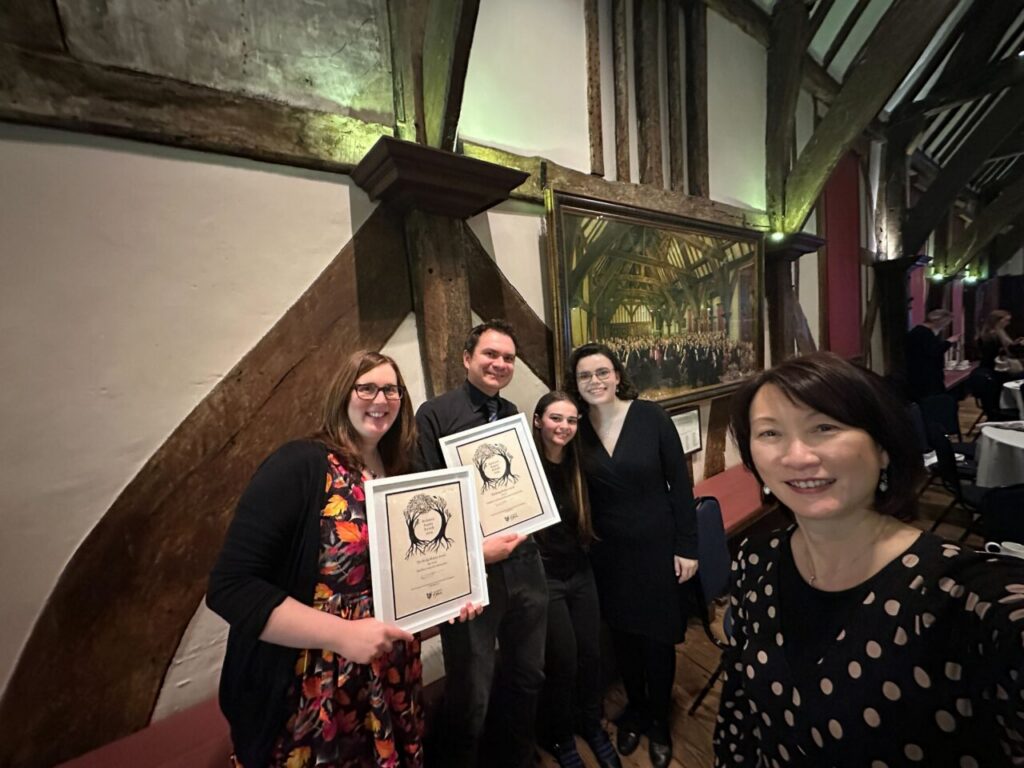
And it is exactly this gap which the project hits which has resulted in it being awarded with the Bridge Builder Award at the University of York 2025 Impact Awards. This award recognises work that spans teaching-research-practice divides and that ‘demonstrates education is an ecosystem, not a hierarchy, acknowledging the interconnected value of all university roles’. At the time of writing the Toolkit has been accessed by 453 unique visitors online, and elements have been integrated into staff training and workshops at the University of York. We are currently working on other ways to expand impact, such as this blog post, creating a published article and converting lessons from the Toolkit into additional resources, such as training slides and informational posters for people to use in lab spaces.
It is my hope that this blog and the Toolkit will inspire people to actively engage with disability and accessibility when planning and designing research projects. To finish with another remark from Isabella, “ultimately, accessibility is not something which can be achieved passively. It has to be an active and collaborative effort, with education and awareness at its core, through projects such as this Toolkit”.
A special thanks to Dr Alexander Reid for providing key technical insights and editorial support for this article.
The project team who created the toolkit are:
Postgraduate Interns: Grace Davis and Niamh Malone, with Poppy Fynes involved in latest updates.
Undergraduate Interns: Isabella Brinton; Amy Cavaliere; Rachel Coldwell; Hester Davis; and Jas Reynolds.
University of York staff: Dr Alexander Reid (Psychology Department, Project Lead); Dr Amanda Hickey (Psychology Department); Lilian Joy (Digital Accessibility Manager); and Alice Bennett (Digital Accessibility Unit).