


Kate Pickett, Professor for the Public Understanding of Social Sciences
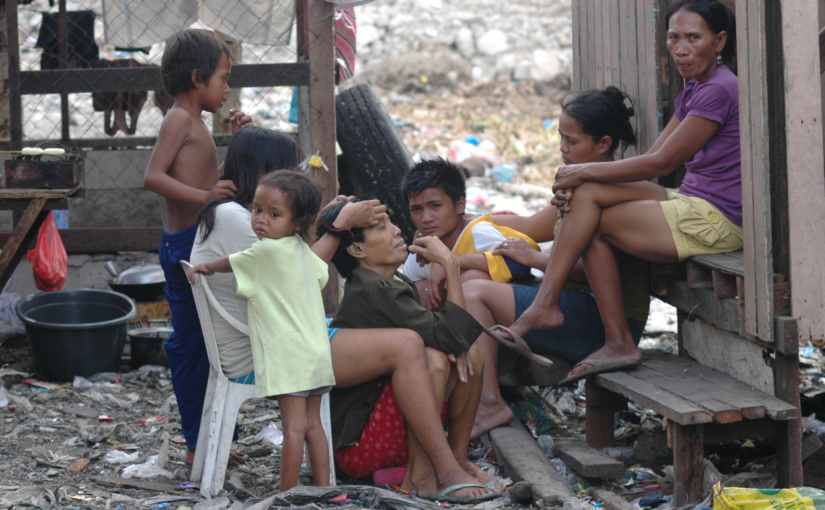
Smokey Mountain is a notorious garbage dumpsite in Manila, Philippines. Over decades it grew into a 50-meter-high mountain of waste, named for the thick toxic smoke coming from fires burning deep within the decomposing rubbish. Smokey Mountain also grew into an informal settlement of over 30,000 people who survived by scavenging – picking through the hazardous waste to salvage and sell recyclables like plastic, metal, and cardboard. When the government forcibly closed the dumpsite in 1995, privatization schemes and development loans failed to provide the low-cost public housing that was promised, forcing thousands to migrate to other dangerous dumpsites. Now, the Philippine government wants the World Bank and International Monetary Fund (IMF) to back a mega waste-to-energy incinerator on the site, threatening to displace a further 23,000 residents, who have painstakingly converted the area into productive, and beautiful, urban farmland. I learned this story by listening to the powerful and anguished testimony of Anora Madrid, one of the residents whose community and livelihood is threatened, at a People’s Hearing in Bangkok, Thailand, which put the IMF and World Bank in the dock for fuelling inequality, while the world’s finance ministers met behind closed doors.
I’ve just come back from supporting the establishment of the International Panel on Inequality (IPI), an exciting and crucial global initiative which could help bring an end to stories like Anora’s.
This took me from Paris to Johannesburg and then from the rarified convening of the United Nations General Assembly (UNGA) in New York to the World Bank and International Monetary Fund (IMF) Annual Meetings in Bangkok. Alongside official multilateral discussions and bilateral meetings with interested countries, I talked with civil society leaders, academic researchers, trade unions, and community movements focused on social change for public good, in a series of parallel summits, strategy convenings, and public hearings.
The Vision: Why an International Panel on Inequality?
The IPI and global advocacy is needed now more than ever.
We are living through a period of compounding and interlinked crises. Extreme economic inequality, climate and environmental destruction, unsustainable sovereign debt, war and conflict, and eroding public trust are reinforcing one another. While international bodies like the IPCC exist to monitor climate change and the WHO monitors public health, the global community has lacked an authoritative, independent, scientific interface to systematically track, evaluate, and provide solutions for structural inequality.
The International Panel on Inequality was the primary recommendation of a commission on extreme wealth inequality led by Nobel Laureate for economics, Professor Joseph Stiglitz, under the auspices of the South African leadership of the G20 in 2025. Building on the groundwork laid by an advisory council of international economic experts and civil society networks, the IPI aims to fill this void. The goal is straightforward and transformative. The panel will provide rigorous, independent evidence on the root causes and impacts of inequalities in wealth, income, gender, and regions; and track national and international policy impacts. It will for example, evaluate how tax regimes, debt service, austerity, and trade agreements worsen or alleviate disparity, establish benchmarks to hold multilateral financial institutions and sovereign governments accountable and suggest policy solutions to catalyse economic and social change.
Moving from the UN General Assembly in New York (UNGA) to the World Bank/IMF meetings in Bangkok highlighted the stark contrast between the high-level policy rhetoric behind closed doors within these settings and the lived experience of affected communities across the world.
From UNGA to Bangkok: Pushing for Institutional Reform
The primary focus at UNGA was ensuring that inequality remains at the top of the global political agenda. As Global South nations face mounting pressures, the multilateral system needs to shift from reactive poverty alleviation to active inequality reduction. The four countries sponsoring the IPI – South Africa, Brazil, Spain and Norway – were seeking pledges of support which they got from several more countries, including Germany, Iceland and Japan.
From New York, the momentum moved to Bangkok for the World Bank/IMF Annual Meetings. Official meetings within these institutions often prioritize market-led solutions and the imposition of austerity in return for loans. But effective action on inequality will require a radical shift to progressive taxation, to sovereign debt restructuring, and to the expansion of non-market public services.
Supporting the IPI in these settings involved advocating for independent oversight and science-driven research to reflect real-world social outcomes and promote social change for public good rather than simply GDP growth. In Bangkok, more countries approved the vision statement for the IPI and some, including Barbados and France formally pledged support.
Civil Society, Academic, and Popular Mobilization
While official multilateral negotiations were happening in Bangkok, some vital policy impact unfolded in parallel spaces hosted by civil society and academia. Addressing a conference focused on public services and social protection, I saw some of the positive policy choices adopted in Asian countries, a region where the richest 1% own 61% of all wealth and the poorest half own just 4%. These included: public provision of childcare services in India, near-universal child benefit in Mongolia, tax-funded, free-at-the-point-of-use health coverage for everyone in Thailand, and near-universal enrolment in school and high standards of educational attainment in Vietnam, whose children outperform their compatriots in the UK, Norway and Japan.
Good news stories. But at a People’s Inequality Hearing and an International People’s Assembly, we heard more heartbreaking stories like Anora’s, from people whose lives and livelihoods had been devastated by World Bank and IMF conditional development loans, austerity mandates and debt service obligations. In Asia and Oceania, 2.2 billion people live in countries that spend more on debt repayments than on health or education. The testimonies delivered in these gatherings showed that the IPI will need to be anchored in human rights and community-led evidence.
Where can we look for leadership?
2026 has been a lost year for leadership for the G20 countries to tackle inequality ad promote social change. The USA has held the presidency, excluding South Africa from participation, and talking only of economic growth, deregulation and fossil fuel-based energy security. Two of the founding sponsors of the IPI, Brazil and Spain, have faced strong right wing opposition at home.
So, the news of President Lula’s re-election in Brazil brought a huge sense of relief and renewed hope. Next year, the UK will lead the G20 and host a summit in Manchester in November 2027. We’ll be continuing to campaign for the UK to back the IPI – it’s surely a project that aligns with our government’s vision and strategy. If you agree, look out for opportunities to lend your support – a lot of civic society groups, including Oxfam, CAFOD, Save the Children, and UNICEF UK, will be spreading the word about how these multilateral institutions (like the UN, the G20 and the World Bank) make decisions that affect us all and campaigning for UK leadership to support transformative change.
Evidence is a Tool for Action, Shaping Political Will
The IPI will not be a purely academic exercise. Its research will equip civil society, trade unions, and policymakers with the data needed to dismantle unjust economic structures. It will support sustained transnational solidarity and help to bridge the gulf between what happens in high-level diplomatic spaces and what people experience in the real world. Evidence can shape political will. As momentum builds for the IPI, let’s try to bridge those gaps. The road toward an equitable global economy is long, but momentum is building.
The views, thoughts, and opinions expressed in this blog are solely those of the author and do not necessarily reflect the policies or views of the University of York