

Sometime between early 1779 and 1780, the poet Anna Seward put pen to paper to write her Elegy on Captain Cook. The British explorer’s death in Hawai’i was cause for national mourning. Anna’s poem rides the wave of popular British opinion at this time; many, Seward included, saw Captain James Cook as a heroic figure valiantly struggling to civilise the Polynesian peoples of the Pacific before dying at their hands. The 38-year-old writer was part of a learned and literary circle of men and women, and keenly interested in botany. From her home in Lichfield in Staffordshire, Anna staged Cook’s South Sea voyage and death within a landscape of ‘scorch’d Equator, and th’ Antarctic wave’, amidst ‘Leaves of new forms’, ‘flow’rs uncultur’d’, ‘vegetable silk’, ‘fruits unnam’d’, and animals such as a ‘Kangroo’, ‘poi-birds’, and a ‘Giant-bat’.
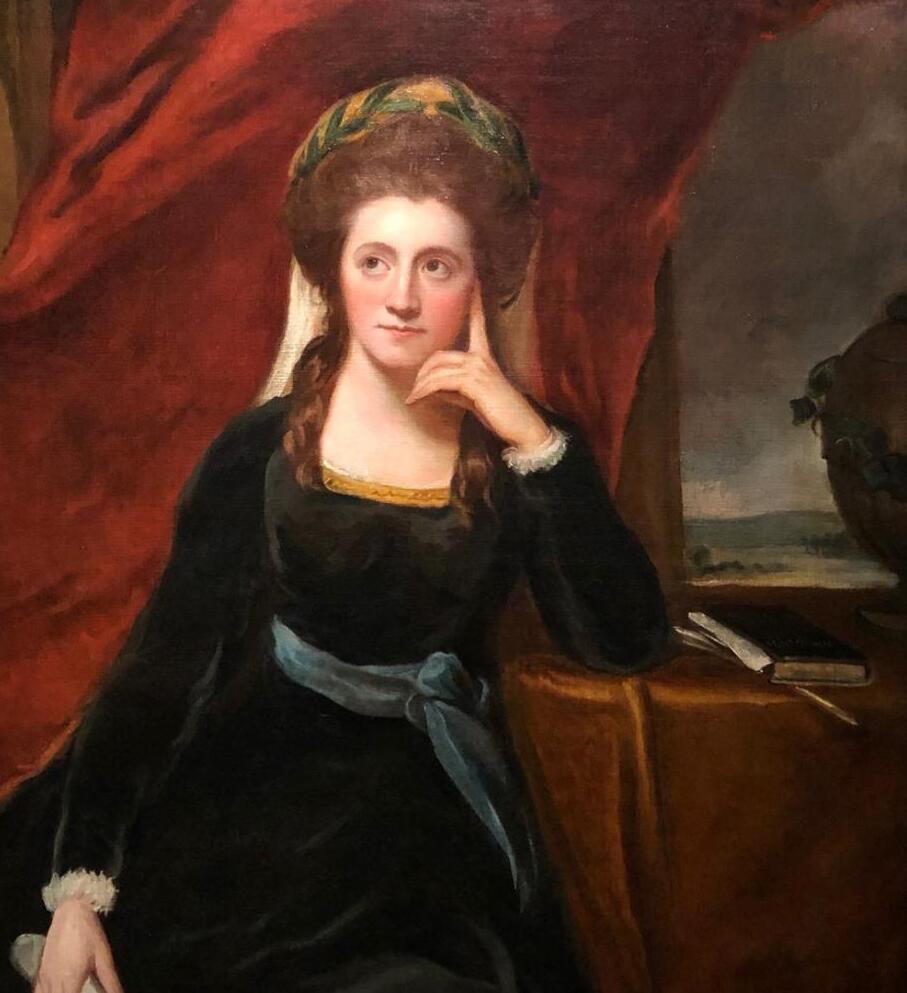

Jumping from one island to another, Anna’s poem is hazy about location, perhaps indicating that she herself wasn’t entirely sure of the geography of these new places. The people that Cook comes across lack individual description or human dignity; they are ‘shiv’ring’ or ‘frowning natives’, ‘human fiends’ who scowl ‘with savage thirst of human blood’. They, like many of the commodities their land produces, are enveloped into a fantasy of the exotic.
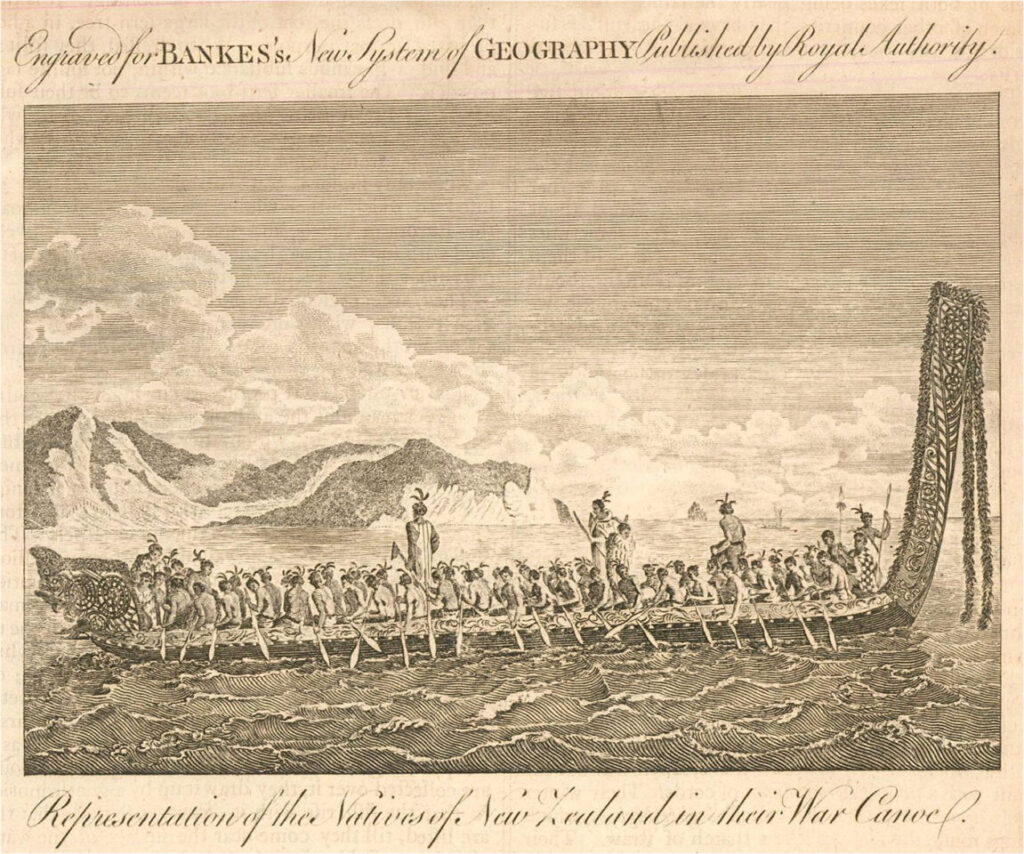
It was not until 1806 that Moehanga of the Ngāpuhi tribe in Aotearoa New Zealand would ‘discover’ England. Anna therefore knew no Māori men nor women but she mentions a New Zealand plant by name. Importantly, it was one that she appears to have seen herself and it provides one of the poem’s few geographical anchors. She writes in a footnote that ‘vegetable silk’:
‘is a flax of which the [New Zealand] natives make their nets and cordage. The fibres of this vegetable are longer and stronger than our hemp and flax; and some, manufactured in London, is as white and glossy as fine silk’.
Harakeke or New Zealand flax (Phormium tenax), arrived in Europe after Cook’s second voyage to the Pacific in 1772–1775, only a few years before Anna’s poem was published.
In the Student Salon cabinet, an envelope of harakeke seeds is modelled after those sent to botanist James Edward Smith from Norfolk Island in the late 1700s. ‘Flax Plant’ is scrawled across one side, accompanied by a drawing of harakeke with tentacle leaves. Inside, the seeds are flat, papery, and black. By including harakeke in her poem, Anna demonstrates how her material interests were central to her writing. Anna’s elegy on Cook earned her the friendship of David Samwell, the surgeon on Cook’s ship Discovery, who later presented her with some of his collection. Knowing her botanical interests, perhaps he gave her harakeke. Cook’s voyage led to the collection of not only seeds and harakeke fibre, but also cloaks. In Māori communities, harakeke was vital for producing items from clothing to nets, and valued for the medicinal properties of its flowers, sap, and roots. When Europeans arrived, they quickly identified harakeke as a plant that would be useful.

Although Anna describes the silken ‘white and glossy’ fibres manufactured from flax in London, the carefully labelled package of seeds are a reminder that the ‘smiling Eden of the southern wave’ and its ‘valuable’ plants were still in the process of being catalogued for European uses. Seeds were only as valuable as knowledge about them. In York, where the Salon and its seeds live today, the Borthwick Archives hold a local letter dated 1863 from Mary Radley to Mary Backhouse. Radley asks her correspondent’s husband to ‘name the seeds enclosed & say if they require heat or particular soil – They have been sent from Otago New Zealand by a nephew of Revd Babington to his sister – who wants me to help her to rear some of them’.

Side by side, Anna’s poem and the Salon’s seeds are a reminder of the reliance of British botanists on Indigenous plant interpreters. Anna’s footnote on harakeke is the most comprehensive mention of Indigenous subjects in her poem, which otherwise renders them somewhat invisible. Likewise, new research has provided evidence that the Polynesian Omai, here painted with two British botanists in a portrait unusual for its sensitivity, helped them to classify Pacific plants when he visited London in the 1770s.
A watercolour painted in 1769 by Tupaia, who joined Cook’s voyage in Tahiti as a navigator, reminds us of the power of such knowledge. It shows an unknown Māori man presenting the botanist Joseph Banks with a crayfish (lobster). Does the botanist want the crayfish as food, or for scientific classification? The man on the left is the one who knows how to find and catch it.

The Māori that Cook met believed in the power of harakeke and used it in everything from clothes, to sails and transportation. While New Zealand’s flax industry faltered at the turn of the twentieth century, an enterprising Kiwi company has started making harakeke into sustainable sports equipment and car bumpers using traditional harvesting methods. Perhaps it’s time to return to this knowledge … These tiny seeds might have the potential to help save a world floundering from the misuse of resources, no small hangover of its colonial past.
Susannah Lyon-Whaley is a Marie Sklodowska-Curie Actions (UKRI-guaranteed) fellow at the University of York.