

The literary salons of the 17th and 18th centuries provided domestic spaces where women and men engaged in cosmopolitan intellectual culture. First appearing in Italy in the 16th century, these salons flourished in France in the 17th century, and gained traction in Stuart England with the arrival of the French queen consort Henrietta Maria to Charles I’s court in the 1630s. Though salon-style gatherings had existed in the Tudor era, Stuart salons were increasingly formalized according to Continental fashions, by patronesses who provided spirited wit, intellectual challenges, and financial support to a network of writers, artists, scientists, political philosophers, and musicians. Salons therefore offer particular insight into women’s engagement with literary sociability through written texts and the material culture of their parlours.
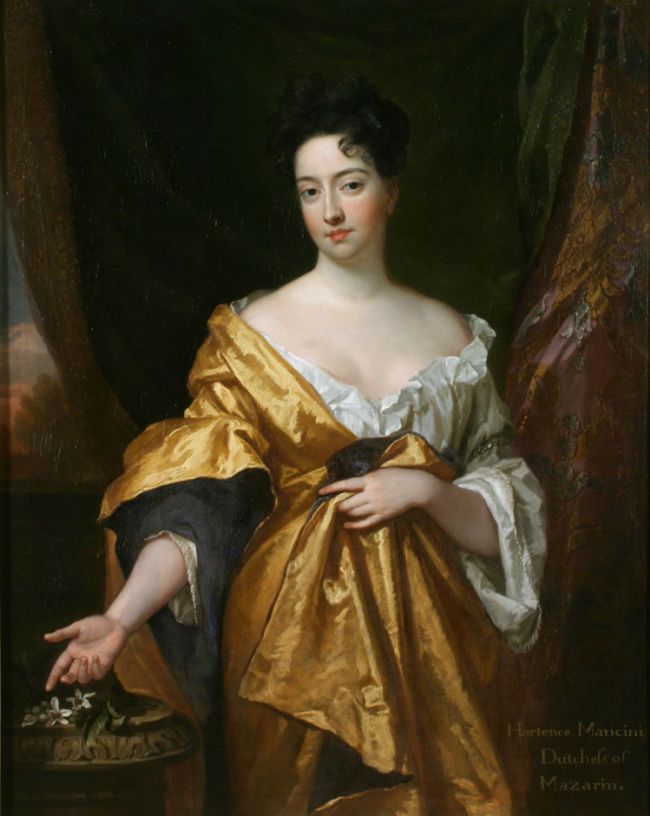

Women who ran salons were often from the upper echelons of society, such as Hortense Mancini (1646–1699) and Elizabeth Montagu (1718–1800).
Though associated with European literary culture, salons were prevalent in places such as India (see the TIDE:Salon project) and Japan (see the British Museum’s Salon culture in Japan). Goods such as coffee had long been a beverage used in fashionable gatherings in the Ottoman Empire before they migrated to Stuart London. The material culture of the parlour connected patrons and guests to many different parts of the world. Items such as sugar bowls and silver spoons indicate not only a fascination with foreign taste, but Indigenous knowledge systems and exploitation. From the 17th century, British salons reflected a growing engagement with foreign powers and lands. In Slavery and the Culture of Taste, Simon Gikandi explored the connection between ‘cosmopolitan culture and the moral geography of slavery’, probing the inextricable link between the salon and slave port. In our project, we ask: How might other perspectives and ways of knowing have infiltrated the space of the salon through objects? What potential does this have for how we teach and research English literature?
Find out more in our blog post ‘The Cabinet Unlocked.’