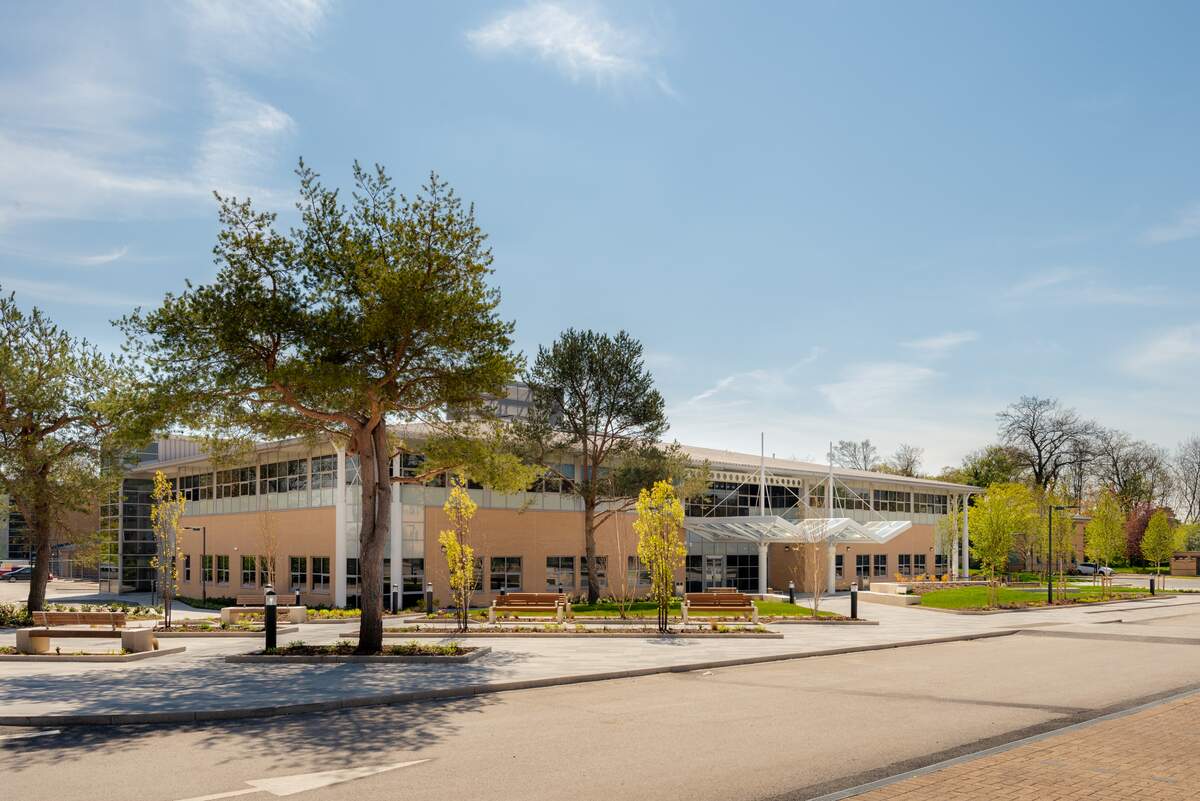
When I first began my MSc in Management at the University of York, I knew I wanted this degree to be more than an academic qualification. For me, it represented an opportunity to step back from my professional career, reflect on my experiences, and prepare myself for the next stage of my journey. From being a technology professional to becoming a future manager and business leader.
One of the biggest decisions I had to make during my MSc was choosing between a traditional academic dissertation and a work-based dissertation. While both options offer valuable learning experiences, I found myself naturally drawn towards the work-based dissertation because it aligns closely with who I am, where I have come from, and where I want to go.
Reflecting on my professional journey
Looking back over the last eight years, I realise how much my career has shaped my perspective on organisations and leadership.
I began my professional journey at Infosys, where I worked as a Senior Software Engineer. Those early years taught me discipline, technical excellence, problem-solving, and the importance of working collaboratively within diverse teams.
As an engineer, success often meant finding the most efficient technical solution to a complex business problem. Every project challenged me to think logically, adapt quickly, and continuously learn.
As my career progressed, I joined Accentureas as SAP MM Consultant. This role marked a significant shift in my professional development. While technical expertise remained important, I increasingly found myself working closely with clients, business stakeholders, project managers, and cross-functional teams.
I began to understand that successful projects are not driven solely by technology. They’re driven by people, communication, leadership, and strategic decision-making.
That realisation became one of the key reasons I decided to pursue an MSc in Management.
There is a quote that has stayed with me throughout this transition:
“Engineers build systems; managers build the people and culture that make those systems successful.”
Another quote that perfectly reflects my aspirations is:
“A good engineer solves today’s problems. A great manager prepares people to solve tomorrow’s challenges.”
These words resonate with me because they capture the evolution I hope to achieve in my own career. I no longer want to contribute only through technical expertise. I want to contribute by leading people, inspiring teams, and helping organisations create lasting value.
Why I chose a work-based dissertation
Choosing a work-based dissertation felt like the most natural extension of my professional and academic journey.
A traditional dissertation undoubtedly offers the opportunity to explore theoretical concepts in depth. And I have great respect for that approach. However, I wanted my final project to reflect the kind of professional I aspire to become. Someone who can connect academic knowledge with practical organisational challenges.
Throughout my course, I have learned that management is not simply about understanding theories. It is about applying those theories thoughtfully within real organisational contexts. Whether studying leadership, organisational behaviour, strategic management, innovation, or change management, I found myself constantly relating classroom discussions back to situations I had experienced in multinational organisations.
The work-based dissertation provides the perfect opportunity to bring these two worlds together.
It allows me to investigate genuine organisational issues while applying the research methods and critical thinking skills developed during my postgraduate studies. More importantly, it encourages me to think beyond identifying problems and instead focus on creating meaningful, evidence-based solutions.
For someone with industry experience, this approach feels far more authentic and professionally rewarding.
Learning beyond the classroom
One of the greatest lessons I have learned during this course is that learning does not stop when we leave the classroom.
The theories we study become far more meaningful when we can observe them in practice.
As someone who has worked in large multinational organisations, I have experienced organisational change, digital transformation, stakeholder conflicts, leadership challenges, and continuous business improvement initiatives. Looking back now, I realise that many of those experiences can be better understood through the management frameworks I have studied at the University of York.
The work-based dissertation allows me to revisit those experiences with a new perspective. Instead of relying solely on intuition or professional experience, I can now analyse organisational challenges using academic evidence, research methodologies, and critical reflection.
This integration of theory and practice is, in my view, one of the greatest strengths of a work-based dissertation.
Looking towards the future
As I think about my future career, I see myself moving beyond purely technical consulting roles into positions that involve leadership, strategy, organisational development, and business transformation.
The world of work is changing rapidly. Organisations are increasingly looking for professionals who not only possess technical expertise but who also understand people, leadership, innovation, and strategic decision-making.
I believe that my combination of eight years of professional experience and postgraduate management education provides a strong foundation for this transition.
Through my work-based dissertation, I hope to develop capabilities that will support this journey, including:
- Applying management theories to solve real organisational problems.
- Conducting rigorous research that informs strategic decision-making.
- Strengthening my analytical and critical thinking skills.
- Improving stakeholder engagement and communication.
- Developing practical leadership capabilities.
- Enhancing my confidence in presenting evidence-based recommendations to organisational leaders.
These are skills that extend well beyond academic assessment. They are essential competencies for managers, consultants, and future organisational leaders.
Employability: more than just finding a job
For me, employability is not simply about securing my next position.
It’s about becoming a professional who can create meaningful value within an organisation.
A work-based dissertation demonstrates much more than academic achievement. It showcases the ability to investigate complex business challenges, analyse evidence critically, collaborate with stakeholders, and develop practical recommendations that organisations can implement.
I believe these experiences will strengthen my professional profile and distinguish me in an increasingly competitive employment market.
As someone transitioning from engineering into management, I want future employers to see not only my technical capabilities but also my ability to think strategically, lead teams, manage organisational change, and make informed business decisions.
A personal reflection
If someone had asked me eight years ago whether I imagined myself studying management at one of the UK’s leading universities, I probably would have said no.
At that time, my focus was on becoming a better engineer.
Today, my perspective has evolved.
Engineering taught me how to solve technical problems.
Management is teaching me how to solve organisational problems.
Engineering helped me understand systems.
Management is helping me understand people.
Engineering gave me technical confidence.
Management is giving me leadership confidence.
This transition has been one of the most rewarding experiences of my professional life.
Choosing a work-based dissertation reflects not only my academic interests but also my personal philosophy of learning through experience. It represents the bridge between my past as an engineer and consultant and my future as a manager and leader.
As I complete my MSc in Management at the University of York, I hope this dissertation will become more than just my final assessment. I hope it will be a milestone that demonstrates my readiness to take on greater leadership responsibilities and contribute to organisations in more strategic and impactful ways.
As the management thinker Peter Drucker famously said, “The best way to predict the future is to create it.”
I believe this work-based dissertation is one of the first meaningful steps in creating the future I envision for myself. A future where I combine my engineering background, consulting experience, and management education to become a thoughtful, effective, and people-centred leader.

Leave a Reply