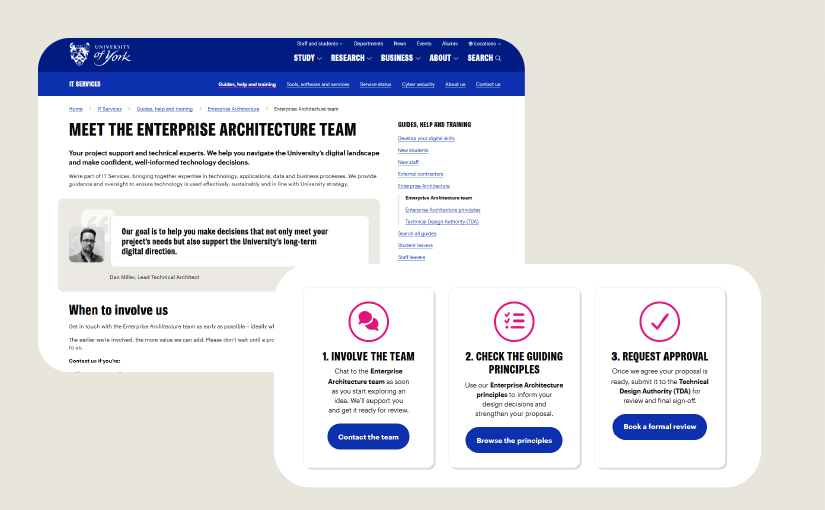
Last year, we worked closely with the Enterprise Architecture (EA) team within IT Services to help promote the system approval process. Historically, there was no web presence – the process lived in Google Docs and often relied on knowing who to ask. Our goal was to demystify EA and help colleagues get their proposals approved as smoothly as possible.
Starting with user stories
A key starting point was creating user stories – simple statements that describe what a user wants to do and why. We paired these with acceptance criteria – a checklist of exactly what the new pages needed to do to achieve the user’s need.
Example user story:
As a member of staff exploring options for buying or replacing a system, I need to know where to start, what steps to follow and what requirements to meet, so that I can efficiently get approval for a new system.
Done when the user:
- sees actions to take, and the order to take them in
- knows what information they are required to submit
- sees contact methods and what they can help with, so that the user can progress through specific stages of the proposal
- knows if this is the right process for them to follow and is in scope for board approval.
The EA team wrote a first content draft to help us understand the process. We then combined their knowledge with our understanding of content design to spruce the content so it was web-ready, accessible and could clearly guide users through the steps.
Collaborative editing in the same room
To make sure we’d got it right, we sat together (literally) and went through the new web pages on the same screen. We checked the pages one by one against our acceptance criteria. This was a turning point; it helped the EA team expand their focus beyond their business goals and clearly visualise the users’ needs.
From those initial drafts, we ultimately condensed the content into four clear sections:
- The landing page: the starting point for those new to the process.
- Meet the team: encouraging early support as the first step.
- The architecture principles: these ground and influence the planning stage.
- Technical Design Authority: ensures proposals are ready to submit.
Consistent signposting
Each page mirrors the process steps in order. EA is still an emerging term outside of IT Services, so these pages ensure that whether you’re looking at the Technical Design Authority (TDA) page or the architecture principles, you know you’re in the right place. This consistent journey builds familiarity and trust.

A huge win for this project was definitely the Technical Design Authority page. We turned it into a practical step-by-step guide with numbered headings and a checklist. Standing in front of a senior board can be intimidating, so the content aims to help staff feel prepared rather than overwhelmed.
The data
Since going live towards the end of last year, the pages have attracted steady interest. With the content being fairly niche and geared towards senior colleagues, we didn’t expect huge numbers, but we can see engagement is consistent:
- 1,000+ views across the section so far.
- Low bounce rate: the average for the section is less than 30%, which is great for complex process content.
- Steady growth: daily views have accumulated steadily since launch.
- Engaged views: on average, people spend about a minute on the three information pages, suggesting they’re actually reading the guidance.

The TDA page is the most visited, which makes sense as the mandatory ‘must-do’ for anyone seeking approval. Though the landing page guides users through the whole EA journey, the data shows many are heading straight to the TDA page via organic search (unpaid search engine results). This suggests its discoverability is strong and our keywords are working. Because of the clear signposting, even if users jump to the ‘must-do’ tasks, they’ll see the EA support and principles are right there in their path, making it easy to get the right advice at the right time.
“We were really pleased with the pages. We enjoyed the build of the pages, and the process for us getting there, and of course the engagement. We thought it would take a lot longer to get these in place from the stories and the build out, but you all really delivered on this one!“
– Dan Miller, Lead Technical Architect (Enterprise Architecture)
The key takeaway
Collaboration and an understanding of each other’s skills were key to this project. Good content + actually talking to each other in person = a win for complex University functions.

Leave a Reply