
We prepped for the annual Digital Accessibility conference headed up by the University of Nottingham as always by lining up freebies and cake. As we did in previous years, we streamed the sessions from each parallel session in three rooms, and booked a pod to allow staff who were presenting to have somewhere quiet to … Continue reading Reflections on DigAcc26
Reflections on community-led skills development
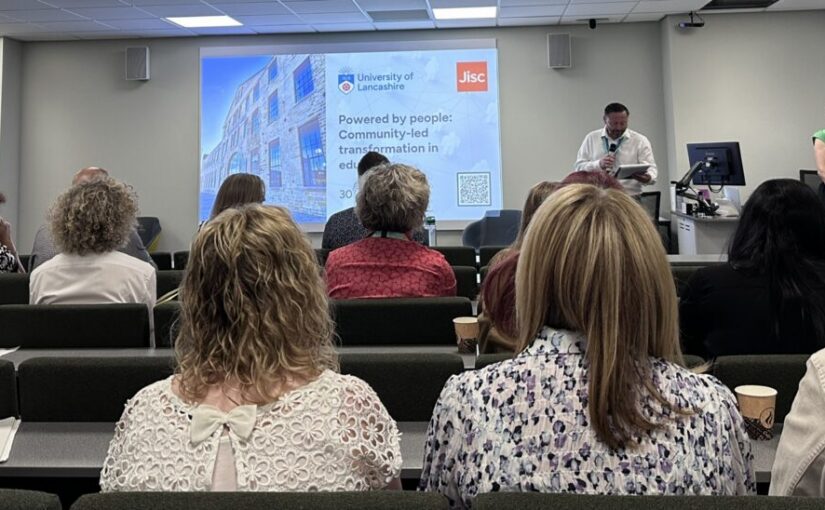
Reflections on the Jisc Powered by People event.
Accessibility Awareness Day
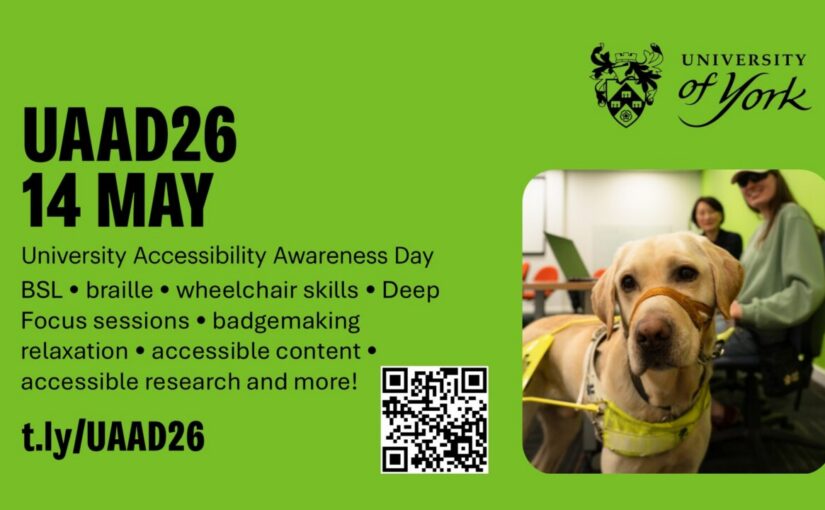
How to celebrate Global Accessibility Awareness Day (GAAD) when we’re in the middle of assessments here at the University of York? Do it a week earlier when everyone can participate! 14 May saw us celebrating our inaugural University Accessibility Awareness Day (UAAD). We were excited to have Pro-Vice-Chancellor Professor Kiran Trehan start the day for … Continue reading Accessibility Awareness Day
Accessible Maths and Learning Technology
The Jisc Accessible Maths working group started in 2021. It was formed from a small group of people in the Jisc Accessibility Community who showed interest in working on this topic and were mostly NOT maths lecturers but a mix of learning technologists (LT) or people with accessibility roles. After Fiona McNab, our first chair, … Continue reading Accessible Maths and Learning Technology
Braille and tactile materials to support Vision-Impaired students – workshop reflections
To celebrate World Braille Day (4 Jan), we’re releasing this blog post about a workshop that we ran in October 2025, introducing staff to braille and ways to support our blind students who use braille at the University. Despite the prevalence of digital technologies, braille is still very important for literacy, to support multiple modes … Continue reading Braille and tactile materials to support Vision-Impaired students – workshop reflections
Braille Matters
The Jisc Accessibility Community ran a Drop-In on the 1st October entitled ‘Braille Matters’. We had a very enlightening presentation by Elizabeth McCann from the Scottish Sensory Centre, introducing the history of braille and why it is still important despite the prevalence of digital technology. I was invited to give my perspective as a learning … Continue reading Braille Matters
Enhancing Inclusion for Neurodivergent Students in Mathematics and Statistics
17 September 2025 saw me visiting the University of Coventry for the Enhancing Inclusion for Neurodivergent Students in Mathematics and Statistics workshop. This was held in collaboration with the University of Bath and funded by the London Mathematical Society (LMS). The event was held at the Library, a wonderful building with silent and group study … Continue reading Enhancing Inclusion for Neurodivergent Students in Mathematics and Statistics
Preparing to teach vision-impaired students
As we head towards the start of semester, it’s a good time to prepare for our students. There will be lecturers new to teaching students who are vision-impaired (VI). This blog post aims to review the tips, support and resources available to help you with your teaching. 1. Make digitally accessible resources The first step … Continue reading Preparing to teach vision-impaired students
Reflections on DigAcc25
The digital accessibility conference, DigAcc25, that took place in June 2025 continues to resonate with me. This blog post is a delayed reflection on the event; by writing about it, it’s also an opportunity to review what I learned and how I intend to take any ideas forward in the year ahead. Organised by the … Continue reading Reflections on DigAcc25
Creating tactile graphics for VI students – part 3
Tactile resources are useful to supplement the digital versions of resources, enabling a student to use multiple senses to understand the data, patterns and connections. In Part 1 of our Tactile Graphics blog series, I was just starting to tackle the heatmap resource shown below. Lots of digital tools are good at providing data through … Continue reading Creating tactile graphics for VI students – part 3