At the start of second year, I hadn’t considered a year in industry. I felt like I was on a roll with uni so spending a year away seemed like an unnecessary detour.
However, after going along to the returning students’ poster session and chatting about their experiences, it began to dawn on me how great an opportunity for personal and academic growth a placement could be. I’m glad I made that U-turn, because my last 3 months at the Earlham Institute have been filled with some of the most rewarding experiences I’ve had studying biology.
Why the Earlham Institute?
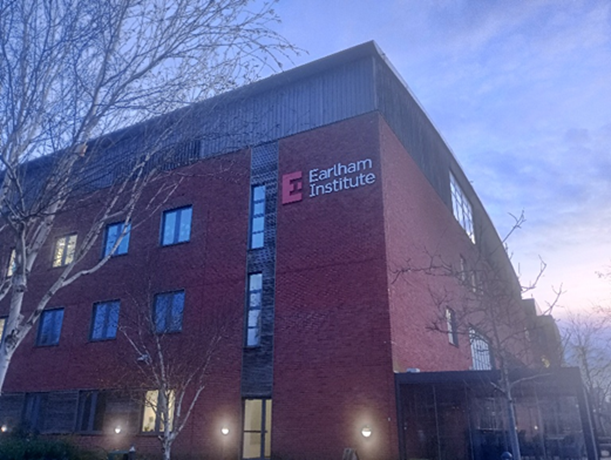
I was drawn to the Earlham Institute (EI) not just because of its globe-spanning research and high-tech equipment, but its mission statement to gain insight into living systems and to apply this understanding for the benefit of the environment, human health and sustainable agriculture. When I first arrived for my interview day, the friendly atmosphere clicked immediately. The interview panel was warm and encouraging as I stammered through my presentation and their questions. Touring around the institute’s facilities, I could see firsthand their cutting-edge technology platforms; from the Earlham biofoundry’s high-throughput capabilities to high-performance sequencing and single-cell analysis. I received my offer not long after returning to York and spent my winter break flipping between disbelief and excitement. After finishing second year and spending a summer at Imperial College London researching plant immunology, I found myself back on the research park ready to get started.

What am I doing?
My first few weeks at EI were pretty unique compared to other placements. Instead of choosing a project in my application, I spent the induction period organising meetings with group leaders, each with a proposed 12-month project. This was a great way to figure out which group and topic clicked with me, as well as to learn more about the huge diversity of research at EI.
Some projects were fully lab-based, others entirely bioinformatics, so I spent a long time wracking my brain on which to pick. In the end, I don’t think I could’ve chosen a more fitting project. I landed in a collaborative project between the Haerty group and Earlham Biofoundry group with a blend of computational and wet lab training. With expert, friendly guidance from my supervisors in both groups, I’m spending the year developing a semi-automated pipeline for characterisation and validation of protein-protein interactions. For more info, check out the Biofoundry and Haerty group pages on the EI website.

My (kinda messy?) attempt at making some art out of yeast cultures which I transferred to a plate using the Earlham Biofoundry’s Echo 650 Beckman, an advanced acoustic liquid-handling robot
The Norwich Research Park has even more to offer beyond my project. Every week I was involved with tons of seminars, external speakers and training workshops. These have been great opportunities to pick up skills beyond my project, like in my 3-day machine-learning course. It’s not all just technical skills; in a couple months we’ll be engaging with the public at the Norwich Science Festival to communicate our research. The key advice I’d give anyone doing a placement on the NBI research park is to take part in any and all opportunities that sound interesting.
Even as a new starter, I’ve been made to feel like a core part of the institute’s community with a welcome dinner, coffee mornings, scavenger hunts, and Christmas parties, as well as just casual chats by the coffee machine. This all helps to stave off my imposter syndrome every time I get to use the biofoundry’s high-tech equipment or when I’m chatting with visiting researchers from around the world at student lunches.
How can you prepare?
Applying for a year in industry and getting ready for an interview is a big commitment. Last autumn was a whirlwind of work up in the creative lounge. Here’s my main pieces of advice if you’re planning on applying for a year away:
- Understand your passions – It seems like a no-brainer but make sure you’re applying for a placement you really click with. You might already know what research area you love, or it may take some soul-searching. However, genuine passion is the key to making an amazing application and acing your interview.
- Research your Interviewers – If you know who’ll be interviewing you, have a read of a few of their papers. If you can relate your conversation to their research it’s a clear sign you’ve got genuine interest in their work.
- Practice flexibility – The biology department has great support for pursuing a placement, including mock interviews to help you prepare. The main takeaway is less rehearsing exactly what you’ll say and preparing more for the flow of an interview.
If you take anything away from this post though, it should be to explore all the options in front of you at university. It can be tempting to try and speed through your degree, but detours like a year away are a valuable chance for personal and professional growth and can offer a gateway into the world of research beyond university.

Leave a Reply